← Medical Doctors CPD

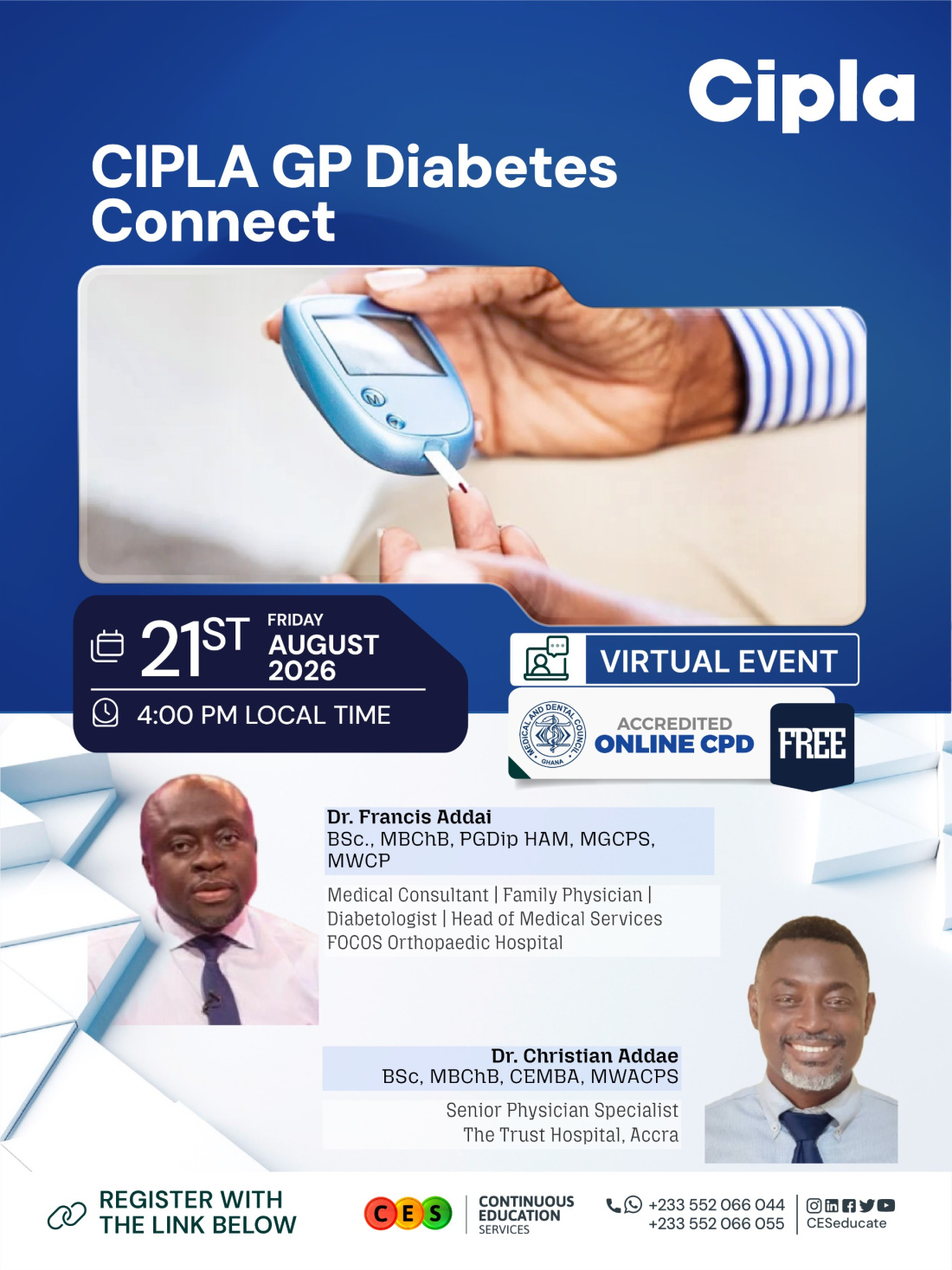
CIPLA GP Diabetes Connect

Please be informed that participation in the post-test assessment is mandatory for the issuance of certificates and the allocation of associated CPD points. Completion and passing of the post-test are required to validate your attendance and ensure compliance with CPD accreditation requirements. Thank you for your cooperation and commitment to professional development. Participation in this training is entirely voluntary, and you are free to opt out at any time. Please be assured that no personal information of any healthcare professional (HCP) will be shared. Your privacy and confidentiality remain fully protected.

Type 2 diabetes is a progressive metabolic disorder characterized by multiple and evolving pathophysiological defects that can contribute to deterioration in glycaemic control over time. As the disease progresses, relying on a single therapeutic mechanism may become insufficient to achieve and maintain treatment goals. This has increased interest in early combination therapy, where medicines with complementary mechanisms of action are introduced to address different aspects of the disease and provide more comprehensive management.

This course will explore the clinical rationale for early combination therapy in type 2 diabetes, with particular emphasis on the role of dapagliflozin, an SGLT-2 inhibitor. Participants will examine how dapagliflozin can complement other glucose-lowering therapies and its potential to provide both glycaemic and extra-glycaemic benefits, making it a relevant treatment option when considered early in the course of type 2 diabetes.


The session will focus on the practical application of early combination treatment, including the clinical considerations involved in initiating dapagliflozin as part of dual or triple therapy. Rather than focusing solely on pharmacological principles, the course will use practical clinical scenarios to demonstrate how these treatment strategies can be considered in different patient situations.

Through a case-based learning approach, participants will have the opportunity to evaluate treatment decisions, consider the rationale for combining therapies, and explore how dapagliflozin may be incorporated into an individualized treatment strategy. The cases will encourage participants to connect the underlying pathophysiology of type 2 diabetes with appropriate therapeutic decision-making.


WHY YOU SHOULD ATTEND/PARTICIPATE

By the end of the course, participants should have a clearer understanding of the rationale for early combination therapy and be better equipped to evaluate the potential role of dapagliflozin in dual or triple treatment regimens. The session is designed to support the practical application of these concepts in everyday clinical practice and promote more informed treatment decisions for people living with type 2 diabetes.


In addition to comprehensive presentations, participants will have the opportunity to engage in a highly interactive Q&A session, allowing for the clarification of complex topics and the exchange of best practices. Make a date with us and equip yourself with the knowledge to make informed decisions in diabetes management that support safe and effective diabetes management and improved patient outcomes. 


PROUDLY SPONSORED BY


This is a virtual event scheduled for Friday the 21st of August, 2026 at 16:00:00 GMT.  


Target Audience: Medical Doctors

Moderator: Pharm. Charles Annor

Date: Friday, 21st August, 2026

Time: 16:00 GMT (4:00 PM Local Time)


Join us for this exciting and enriching session to advance your expertise in diabetes care and take the next step toward improving patient care in your practice!

Overview

Course Description

The progressive nature of type 2 diabetes, driven by multiple pathophysiological defects, makes early combination therapy a logical and increasingly recommended strategy. This session will focus on the clinical application of this rationale, specifically highlighting the role of dapagliflozin. As an SGLT-2 inhibitor, dapagliflozin offers complementary mechanisms of action and provides glycaemic and extra-glycaemic benefits that are particularly valuable when initiated early in the disease course. We will explore the evidence for initiating dapagliflozin as part of a dual or triple therapy, using a practical, case-based approach to help you confidently apply these strategies in your daily practice

What you will learn

By the end of this training, participants will be able to:

1. Select appropriate patients for early dapagliflozin combination therapy based on QRISK, CVD, or heart failure status.
2. Pair dapagliflozin with complementary agents to achieve synergistic glycaemic control.
3. Initiate dapagliflozin confidently with practical dose adjustments, eGFR checks, and safety monitoring

Course Content


Lecture Sessions

  • LIVE EVENT: Friday 21st August, 2026 @ 16:00 GMT (4:00 pm) 2 hours

Downloadables

No downloadable content added to this course yet.

Steps to Join Course

  • 1. Register or Login
  • 2. Confirm your email address by clicking a link from your email
  • 3. Choose course under your profession
  • 4. Click on Get Free Course
  • 5. Find your new course under My Courses
  • 6. Click on course to see contents
  • 7. Complete all Sessions and Quizes
  • 8. Download your Certificate

About Facilitators

  • 3 Courses on CES

Dr. Francis Addai

BSc., MBChB, PGDip HAM, MGCPS, MWCP

Medical Consultant | Family Physician | Diabetologist | Head of Medical Services

FOCOS Orthopaedic Hospital

Dr. Francis Addai is an accomplished Medical Consultant, Family Physician, and Diabetologist with a wealth of experience in clinical practice, healthcare leadership, and public health interventions.

View full profile / courses

  • 1 Course on CES

Dr. Christian Addae

BSc, MBChB, CEMBA, MWACPS

Senior Physician Specialist

The Trust Hospital, Accra

Dr. Christian Addae, MD, MWACPS, is a Physician Specialist and Endocrinologist with expertise in diabetes care, endocrinology, and metabolic disorders. He has extensive clinical experience in the management of patients with diabetes and other endocrine conditions and is involved in clinical coordination and specialist medical practice.

View full profile / courses